This article is part of our SERP API production best practices series.
In the previous article, [SERP API Beginner’s Guide](https://xx/SERP API Beginner’s Guide), we introduced how SERP APIs work and where they are used. We learned that SERP APIs allow you to obtain search results for a given keyword on Google, Bing, or other search engines, and return the results as structured data.
Because this basic functionality seems simple, SERP APIs are sometimes misunderstood as “just selling packaged web scrapers.”
This article explores the true nature of SERP APIs through several angles:
why SERP APIs exist, the problems they solve, the capabilities they provide, and their business value.
What Is a SERP API?
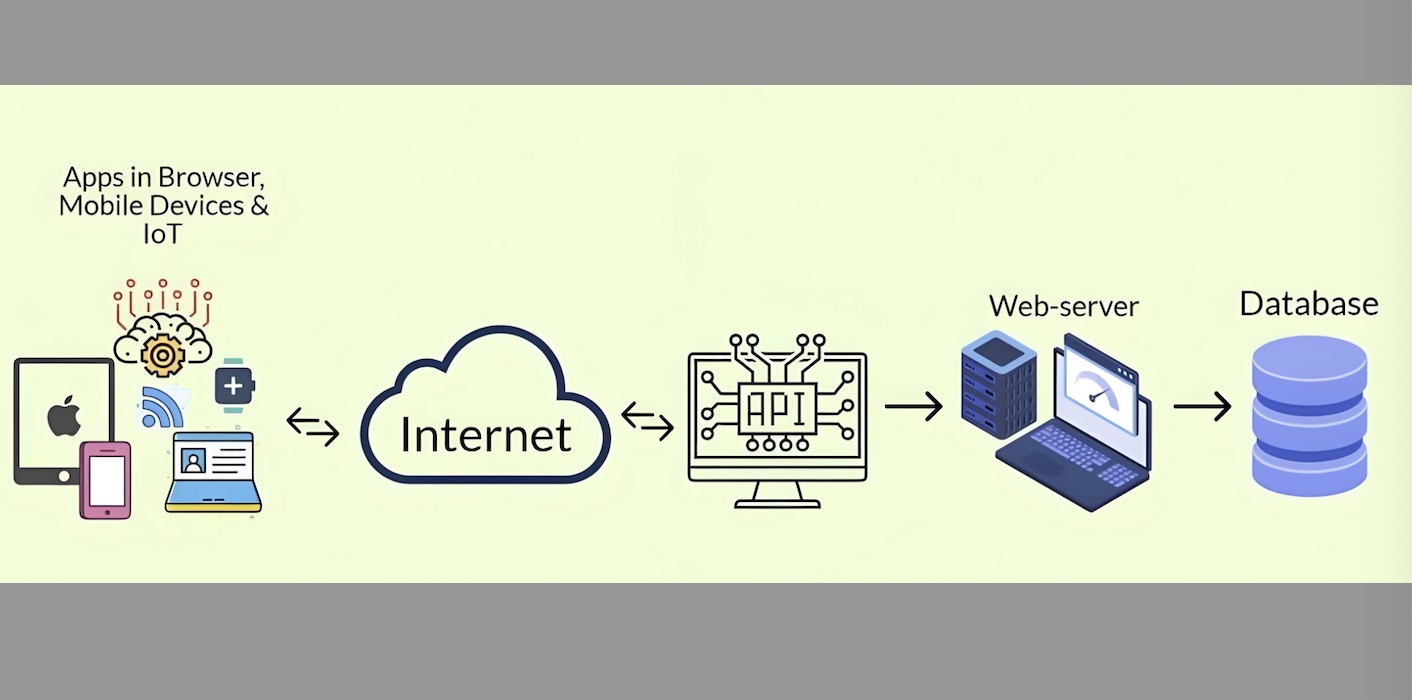
SERP API stands for Search Engine Results Page API. It exposes search engine result pages as structured data through an API, converting what originally required manual browser viewing into JSON data that includes titles, links, rankings, snippets, ad placements, and more—making it easy for programs to consume and analyze.
Although the functionality sounds simple and could theoretically be implemented with a scraper, real-world production requirements introduce major challenges:
- Enterprises need large volumes of accurate search data.
- Search data is business-critical and must be collected efficiently and stably.
- Web scraping at scale is extremely difficult to maintain.
These challenges create a sustainable market space for SERP APIs. Specifically:
Why SERP APIs Exist
● Heavy Enterprise Dependence on Search Engine Data
Many businesses critically rely on search engine data. For example:
- A company doing Search Engine Optimization (SEO) needs to continuously track website rankings to adjust strategies quickly.
- A brand monitoring market reputation across regions needs real user search results to analyze sentiment and competitor activity.
These scenarios require a standardized, automated search data acquisition pipeline—something manual browsing cannot provide.
● Building a High-Quality, Stable, and Compliant Scraper Is Extremely Hard
Real-time search data cannot be retrieved manually, and naive scrapers break quickly.
Production scraping faces challenges such as:
- Anti-bot detection
- Frequent layout changes
- High-volume data extraction
- IP blocking and rate limiting
To overcome these issues, a production-grade scraper requires:
- A large, stable IP proxy pool
- Anti-fingerprint and browser-rendering capabilities
- CAPTCHA-solving when necessary
- A robust, distributed, fault-tolerant architecture
All of this becomes highly complex and costly.
SERP API providers solve these problems at scale and amortize infrastructure costs across many customers.
The True Nature of SERP APIs
At the technical level, SERP APIs indeed use web scraping internally.
But equating SERP APIs to simply “selling scraper data” dramatically underestimates their technological and commercial value.
Below are the core aspects that define the real essence of SERP APIs:
1. Breaking Through Anti-Bot Mechanisms
Websites deploy anti-scraping systems to protect stability and data privacy.
Ordinary scrapers have low success rates unless they invest heavily in:
- Large distributed proxy networks
- Dynamic fingerprints
- Browser simulation and rendering
- Rate-control algorithms
SERP APIs hide this complexity and ensure consistently successful result retrieval.
This anti-bot capability is one of their strongest competitive advantages.
2. Global Nodes and Localized Results
Search results vary by country, language, and region.
To fetch authentic local search results, you must simulate users across the globe.
This requires:
- Global proxy networks
- Multi-datacenter deployment
- Localized time zones and language settings
These come with enormous operational costs.
SERP APIs provide this global infrastructure using a shared-cost model across all customers.
3. Unified and Stable Structured Search Data
Raw HTML pages are complex, inconsistent, and frequently changing.
SERP APIs extract and normalize content into a uniform structure—titles, rankings, snippets, links, ads—and output it in JSON.
This eliminates dependence on webpage layout and provides a clean, reliable data engineering interface.
4. Compliance and Legal Protection
When companies scrape data themselves, they risk:
- IP bans
- Violations of website terms
- Potential legal issues
Using a SERP API transfers compliance and legal responsibility to the service provider, who ensures that data retrieval is lawful and compliant.
5. Stable SLAs and Commercial-Grade Reliability
Enterprises need:
- Predictable cost
- High data reliability
- Fast incident handling
Homegrown scrapers vary widely in quality and lack strong operational guarantees.
SERP API providers, by contrast, offer:
- High uptime SLAs
- Dedicated support
- Scalable infrastructure
- Enterprise-level reliability
In essence, they transform what would be a fragile internal scraper into a sustainable, managed data service.
Conclusion
SERP APIs are far more than resold web scrapers.
They solve the hardest problems in large-scale web data acquisition and provide a stable, secure, and globally scalable search data platform.
This—not scraping alone—is the true core value of SERP APIs.